Bush War LZ

and jumpers with Saviac Static Line rigs.
When Mugabe and his Zanu Pf took over the country many Rhodesian, with the money and the right passports, aware of its anticipated destruction and the risks to life and limbs left to start a new life in other parts of the world, a lot headed to nearby South Africa.
Others who for generations had called Rhodesia home and doubtful of finding the same quality of life stayed on gambling on the future. Today with a contented life, wisely keeping out the political fray the decision taken by these few appears to have been vindicated.
A handful of RLI, Selous Scouts and Sqn former members went on to settle along the US Atlantic seaboard among them a few Americans. Nowadays when the itinerary of my travels allows it the time of an afternoon we get together for a barbecue – or the closest imitation to a braai- and shoot the bull after the sandbags have been put up.
The obituaries published by the different associations at an accelerated frequency are an unsolicited reminder that the number of those who took active part in the bush war is dwindling. For the brief duration of a unique historical time window these few experienced a world so alien to the generation of today that their stories are met with a mystified look.
This website created a few years ago has revealed a wide and growing interest for the bush war. Last year it passed the million reader mark from more than fifty countries, among them many enthusiasts for military artifacts of that time.
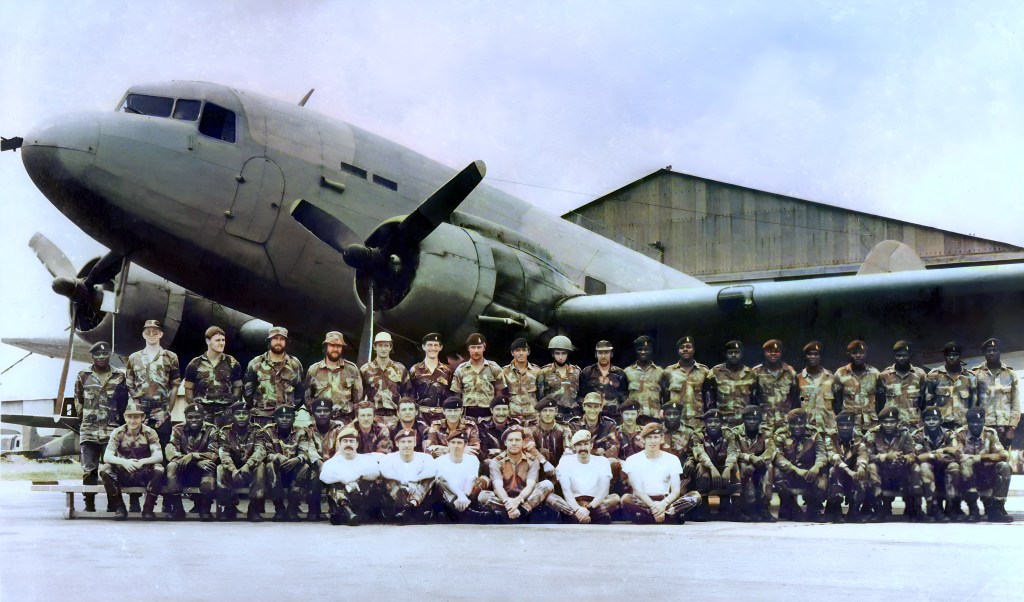
Recently when he learned I was traveling through his neighbourhood a collector invited me to view his displays. The latest addition to his collection was a brand new Rhodesian army jacket he had purchased on the internet. One glance unfortunately told a knock-off, if the camo pattern was right the colour shade and the material not quite, he confessed having feared so. Since the disbandment of the Rhodesian Army the gear on the market appears to have multiplied – in keeping in fact with the number of those who served in C Sqn SAS.
On another occasion a group of American collectors weapon buffs knowing I was going to stop by booked a range and invited me to do some shooting. Most of them veterans, armored battalions in Vietnam, the Special Forces in Grenada, the Middle-East or even the CIA. They had stories and proved an impressive history literacy, naturally none of them tried to hide their open contempt for the ambient drivel peddled by the mainstream media and Hollywood.
A dozen different WW2 and more recent models of AR and machine guns from their personal arsenals had been lined up on the bench, each weapon in mint condition. One had been granted the last State issued license for an M2 .50 cal. though he has to contend with the authorities regularly turning up on his door steps to count the links on each one of his ammo belts.
Later they admitted having been curious to observe the weapon handling and marksmanship of a former Rhodesian SAS. Flying the flag I had to exceed their expectations, which I think I duly did. One never forgets the drill, just like riding a bicycle.
One afternoon back home while working on the renovations of the farm I recalled the conversation about the camo jacket. To clear some nagging doubts I went up in the attic to look for my old RLI QM trunk, a prized possession I had lugged all these years on my frequent home changes.
Under a hanging light bulb I lifted the dusty heavy lid. The longs, the shirts, the boots, webbing and the rest looked like to have kept as when they were packed. After comparing the material I could confirm the guy’s jacket was a knock off.
Rummaging further I found at the bottom a folder filled with wads of training notes – also snapshots of girlfriends met during the war, Rhodesia had some real stunners – and an olive colour rubbery pouch used to pack boxes of 7.62x 51 rounds. Inside were badges, dog tags, the breech block of an SKS, some documents and two army issued small blue books, one was for logging dives, the other the parachute ‘descents’. This one I opened.

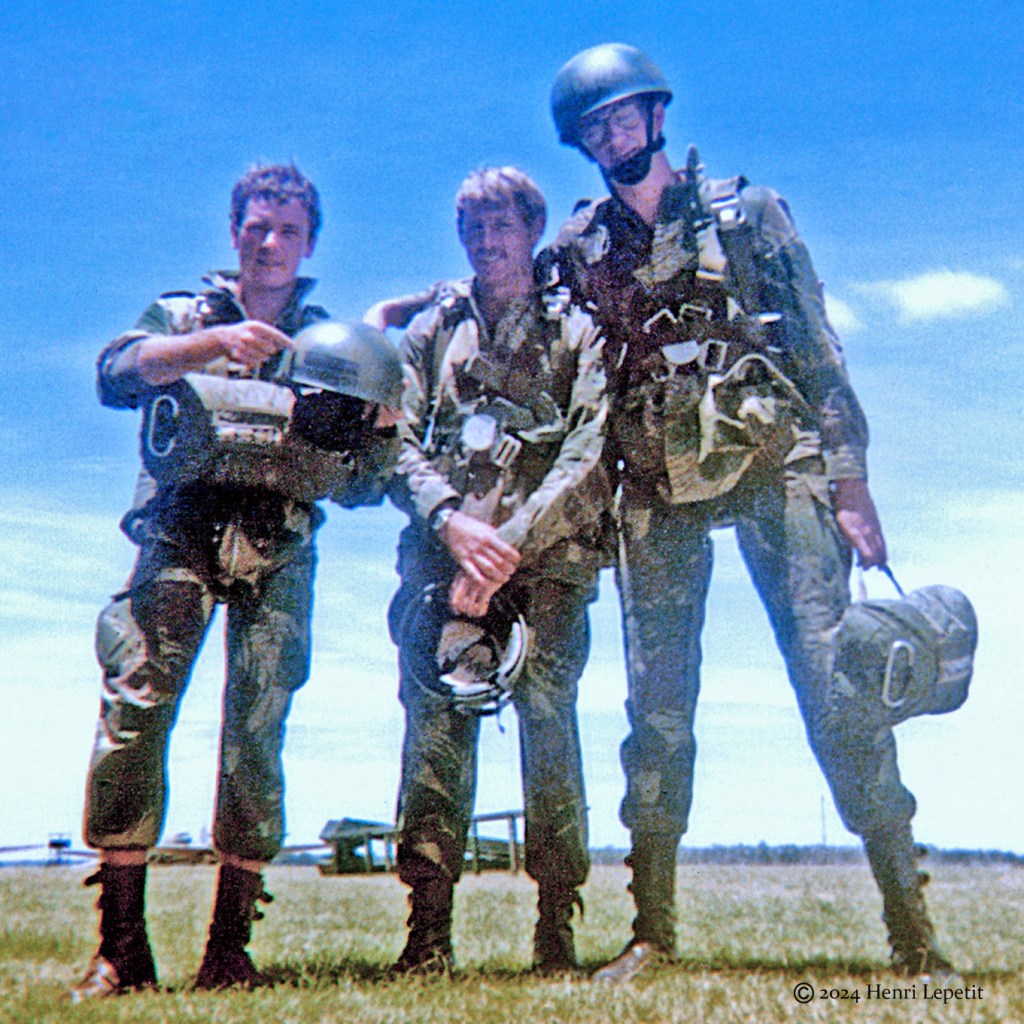

Leafing through the pages I paused at the entries in red ink, op jumps, three of them. In a quirk I had stopped recording the others.
One of them bore the mention of a broken ankle. Reading the line over brought only sketchy recollections. Deeper in the pouch was a tiny note book. The header on a page was the date of that jump followed by scribbled notes. Images and impressions began to emerge.
Early in the morning of the 30th of July 1978 a Dakota dropped assault formations on a terrorist camp deep in Mozambique.
‘ 500, Dakota, Op M, S/L , 10/24, Fireforce+R+W Pk (Broken Ankle) ‘
In the weeks leading up to this attack callsigns from the unit had been inserted deep in the country to carry out surveillance of a suspected Zanla terr camp and record the lay-outs, numbers, movements, and access routes. In our equipment we carried a gyroscopic set of binos to keep tag on vehicles registrations for target identification.
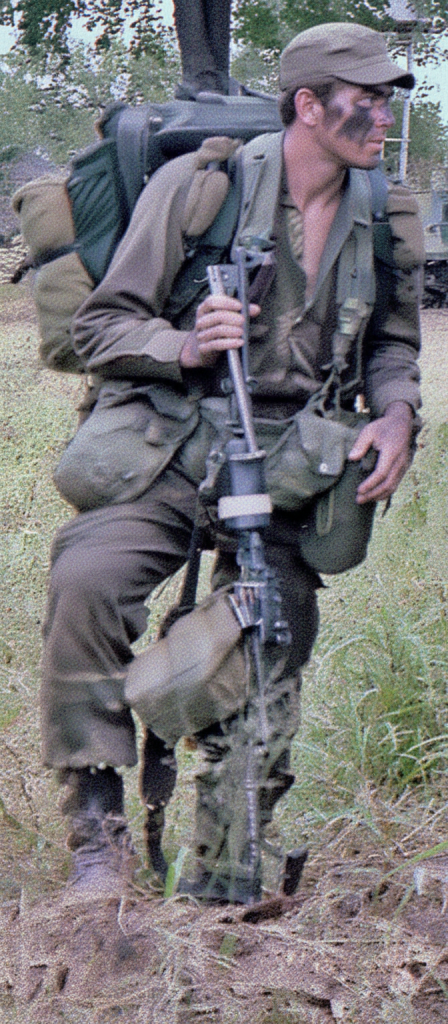
In the brutal heat of the south-east our four-men patrol mapped the area for thirteen days (a nebulous guess: Wayne Ross-Smith, ‘Mo’ Taylor, or Stu P. possibly Bruce T. …?). Hunkered in the scattered shade of scraggy mopane trees during the day, at dusk and dawn off on extensive anti-tracking reconnaissance hikes while in a permanent watch for compromise – due to an anatomical snag when sighted a white man wearing Fred garbs even thoroughly blackened up could never hope to fool the locals longer than it took them to recover from being startled, but it gave time to react.

Down to drops of tepid liquid slushing at the bottom of our water bottles a consensus was reached within the callsign -and a base confirmation- that the job had been done, when an opportunity presented itself.
In a sudden inspiration and confident to pull it off we sprung an ambush which turned out a good one only to realize we had kicked a hornet nest. In no time the fretting Freds were swarming the place until we found ourselves boxed in. We shot a way out in a brief skirmish. Suspecting our small number of us the Freds unfazed went hard on the chase.

Several hours of forced march put a safe distance ahead of their lead. An uplift was radioed. We cleared an LZ to specs to be told in the next comms to move further on. Much later, done clearing another one we dog-legged into cover.
At the end of what felt like ages came the distant thrumming of choppers. After a short radio bearing and an orange smoke they were overhead stationary, a K-Car and a Lynx circling close-by. To catch the bar and the hooks lowered from such a height took some doing as it kept swaying in the deafening whirlwind of dust and twigs. We were winched up one at a time while annoyingly the tech kept flapping his hands about to hurry things up. He knew more that we did, shafts of tracers followed our precipitated departure. The Freds had been right up our heels.

Incidents benign in appearance mark the memory. Minutes in the air I was readjusting the D-ring of the extraction harness inside my shirt when the entire stitching came apart. The guy sitting in front who had been watching raised an incredulous eyebrow.

In the morning after our report we were given the rest of the day off. That first lunch was as delectable as those were when returning from a deployment.
We were all sitting at the table in the kitchen area enjoying a mug of tea when we word was given to get ready for an imminent deployment.
At the briefing we learned we were heading back to the same area. I caught the eye of the other guys. Returning so soon to that hellish shit hole gave an irksome sensation even if this time instead of a drawn out lurking it was to be for the short duration of a camp attack.

The last stars were still faintly visible in the dawn clear sky. All around stretching to the horizon the bush was an impenetrable dark line alive with the occasional sounds of its wildlife.
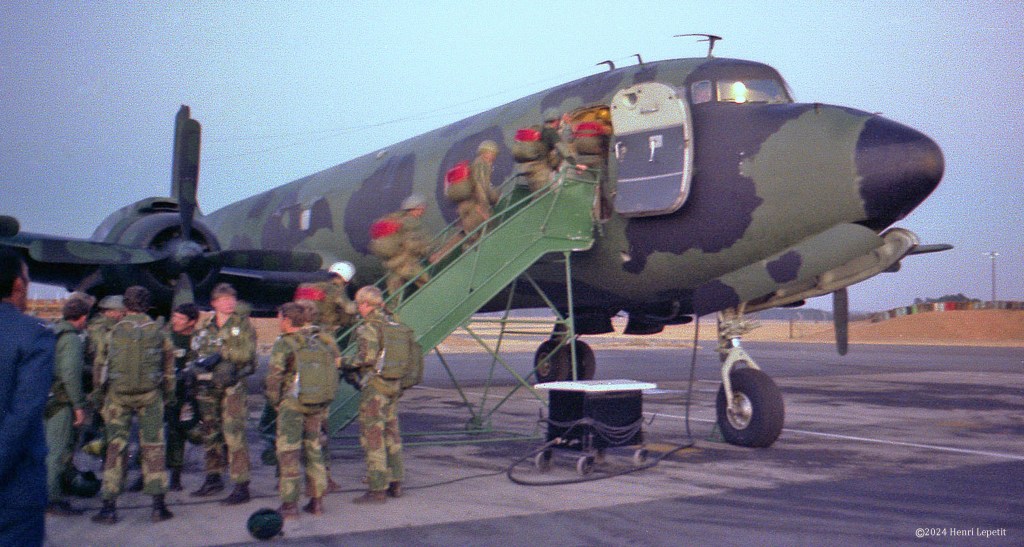
The surrounding stillness was broken by the exhausts spurts from the ignition and after a brief revv belching blue smoke the engines of our Dak were fired up the propellers set on an idle spin.
We lumbered our way to the plane a Saviac strapped on the back the rifles and RPDs secured behind the shoulder their muzzles taped. The heavy packs were heaved in the door and helped by the dispatchers each in turn awkwardly climbed up the narrow aluminium steps.


I slumped on the canvas bench already drenched with sweat. In the rectangular window behind the guys on the opposite row the bright red ball of the sun was showing through the early haze.
The noise from the engines made the chatting light, busy with the last checks on their gear some were perhaps wondering about a future reduced to the minutes, more likely seconds following their landing when they will have to deal with the expected opposition. Trifling concerns, a camp attack like any others the atmosphere in the plane as lighthearted as that of a team of surgeons on their way to perform a routine operation.

The air assault with the Daks, the choppers and the Lynx was already on its way, Hawker Hunter jets providing the air cover. The border was crossed at low altitude over the familiar ochre-greyish stretches of dry pans dotted with wiry acacias, specks of thorny bushes the long shadows of tall red anthills, the rare baobab and at times the irregular lines of trodden paths connecting odd clumps of huts with their wafts of cooking smoke.
With the first air bumps I began to regret the two strips of bacon I picked off a tray in the kitchen on my way to the equipment area. The medic advised an empty stomach before a planned punch-up for gut shots. This instance should be added.
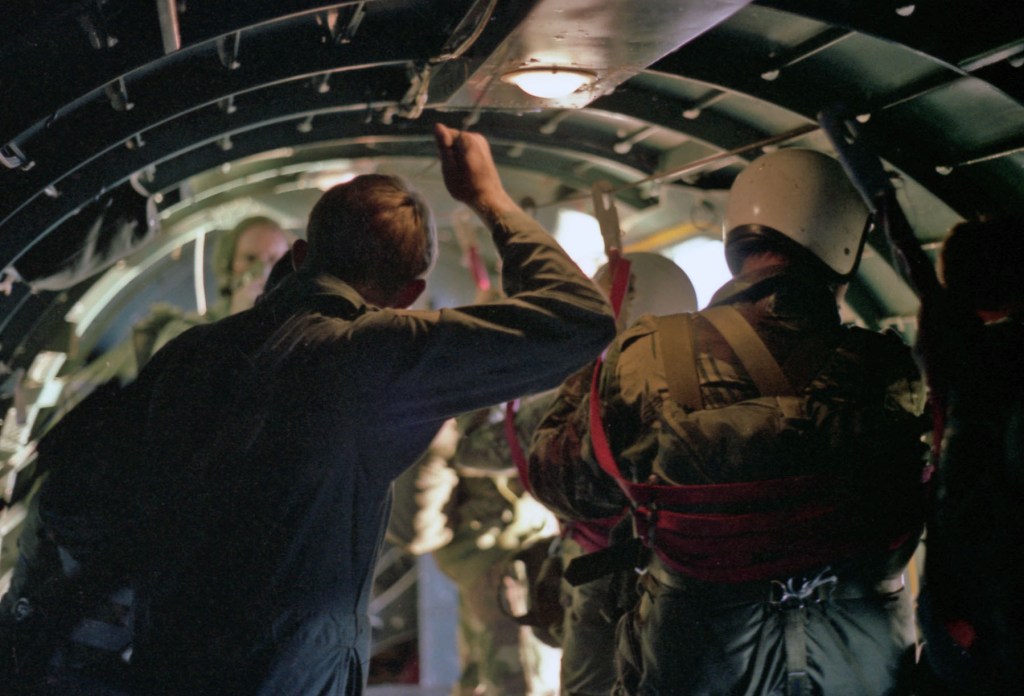
Forty five minutes and we were circling the edge of the terrorist camp. Raising upturned palms the dispatcher motioned us to stand. Timing the air pockets through turbulence of weightlessness and G crush I made a thrust at the cable and clenched it while I snapped- hooked-and-pinned. One could almost hear the groans from the aircraft aluminium frame, and could not but marvel that a structure with over thirty years of weathering and battering could withstand such a stress.
We were now skimming low enough to clip the tree tops, the wings shooting erratically up and down. A plane load with a single thought, to get off this stomach churning ride. A moan rose through the cabin when the plane banked once again for yet another pass. Sharp ticking sounds, like gravel hitting a windscreen, ground fire going through the fuselage.
With a grip on the cable all the eyes were riveted on the tiny red light above the doorway. I heard a muttering behind me, ‘…for fuck sake’s…when… are we getting the fuck out…’ I turned to see my neighbour struggling to keep it in. On top of the sweltering heat I began to feel beads of sweat from a solid nausea coming up thinking I was about to retch my way through a camp attack.
A hot draught was blowing the length of cabin, below scrolled a yellow-reddish dirt ground in a succession of crests and ravines of dipping and rising broken hills with copses of trees clinging to large bare boulders.
To a unanimous relief the first guy was finally made to stand in the door. The red capped light switched off, the green one came on. Shuffling in a hurried momentum while fighting for balance the line ahead vanished into the blinding light my hook was snatched away shoved down the cable line and I was swept in the slipstream. The guy in front already nowhere to be seen.
At that second a picture imprinted itself in the brain.
I had fallen into a bright blue sky pitted with anti-aircraft black puffs, my canopy was still deploying as two Hunters screeched feet over our Dak – I may have seen the colour of the helmet of one of the pilot. From the LZ less than four hundred feet down rose an earth shuddering rumble where little figures scurried through palls of smoke crisscrossed by streaks of tracers, orange flashes of thumping HE blasts, flying sparks from the 30 mil airstrikes, sheets of flames from tumbling canisters of napalm and the continuous pounding from the hovering K-Cars with their 20 mils. A sight that sticks.
Before I could check if my parachute had fully opened my feet were entering the top branches of a bunch of trees. In a jolt I let go of the elevators to put my arms in front of my face and crashed down what I thought to be the entire height of a tall tree when not expecting it I came to a soft bouncing stop. For the next seconds I hung, ecstatic.
Now the sudden urge to get down, I tried to guess through the branches the distance to the ground below my dangling feet. My pack somehow had already parted ways. I was a few feet away from the jutting wall of a small escarpment and nothing within reach to grab on. The basic para course practice was to use the reserve to climb down. I popped it out to see it getting caught in the lower branches then I found the capewells were entangled with the rigging-lines.
A holler came up from the bushes way below. Bill T. a full Cpl. getting impatient. A good guy and operator to be around. Once on our free fall course, someone took a jab at his portly stature he answered with a nimble hand flip the entire length of the hangar.
Cpt. Rob Johnstone was in charge of the callsign – one of the finest officer I was ever privileged to serve under- and Bill T. 2IC. part of the same drop. They were ready to move, I was still hanging up that tree.
‘Lepetit, stop fucking around and get the fuck down!’.
Terrs were making a break out in our direction. The large olive green canopy draped over a tall tree could not go unnoticed for long. They spotted a sitting duck and a burst of tracers chipped the bark whizzing to ricochet off the boulders.
I could not help but suspect that Bill’s concern was not so much for my well being as to the unwanted attention I was now drawing.
During the brief firefight I succeeded in unlocking one of the quick release the other was wrapped solid by the cords. The heat became pressing when more rounds cracked by, I fumbled for my AK bayonet kept at all time razor sharp. The blade barely touched the cords, I dropped.
Passing the reserve on the way down I had the time to realize with the added weight of an RPD a set of webbing loaded with ammo belts and water bottles this was not going to end well. With a braced feet-and-knees-together I hit the carpet of dead leaves like a sack of bricks my RPD digging in the side ribs and one foot catching a hidden log.
As I stood on it a numb pain shot up. I got out of the harness and took the boot off to see the damage. The ankle was already swelling. Rob Johnstone took one look and confirmed as I had suspected a broken bone. Not a case to warrant immediate medic attention I put the boot back on and tightened hard the laces.
When a warning was radioed of another group coming our way I gave up trying to take down the entangled canopy. I kept the harness.
The sweep lines progressed in starts throughout the day with a series of brief skirmishes occasionally using the bomb craters for shell scrape where the soil had been transmuted to a fine powder chunks of it in vitrified, the tree trunks nearby shattered to splinters.
Advances were frequently delayed due to a precautionary operating measure unofficially introduced. Long aware of some enemy reason defying physical resilience instances had been witnessed when assumed out of action it still managed to inflict injuries. In addition to the usual caution exercised when approaching a body it was recommended to ascertain with carefully aimed shots the head was separated from it.
Late afternoon the situation was unwinding and residual sporadic gunfire was heard. With the aerial support easing up fewer choppers were flying about. The raging flames from the bush fire had abated the area now a vast smoldering zone over which a light searing breeze carried wisps of smoke and the stench of bodies mixed with the acrid whiffs from burnt explosives. We took a smoke break for a brew up.
Crates of ammo and weapons were recovered and piled in a massive heap. When it went off the blast sent a shock wave for almost a mile around.
Eleven hours after the drop Capt. Johnstone made sure I had a seat on the second chopper shuttling the troops out back to base. Not sure, but I do not recall any casualties on that day.
An x-ray showed a partially broken ankle. Major Curtin, an old school C Sqn officer was in charge of the unit admin. On learning I was going to be off duty for a few weeks and with no relatives, concerned he suggested I went to spend some time at a farm belonging to some friends of his in Goromonzi, an hour east of Salisbury. The husband had been called up and his wife, mother of two young children had been left to run the farm.
She came to Kabrit with her big shiny Jaguar and we drove to the farm, before leaving I went to armory to draw an FN, an Uzi and a sports bag full of ammo.
The weeks went quickly by in a restfully enjoyable routine. No serious terrorist presence had been reported in the past months after the farmers and the BSAP had promptly dealt with a couple of suspects. The fifty odd workers living on the farm with their family were happy with their lot and reluctant to jeopardize it freely contributed to its security by reporting anything suspicious.
Before breakfast we made the round with the foreman -a Shona- in the Hilux pickup to allocate the hands their work for the day. The estate was kept in an immaculate order, each field with its sharply trimmed border not a single weed anywhere to be found, a delight to the eye. In the afternoon I checked the miles long fence for mending and spoors of wild life. When the children returned from school a tea hamper was prepared and we drove with the two Ridgebacks to the far side of the farm to practice with the FN and the Uzi.
The cast on my leg eventually came off I reported back to the barracks just in time to have my kit organized and loaded on the back of a 4.5 part of a convoy leaving for the Zambezi valley.
Two mornings later I was readjusting the sit-strap on my Saviac, my RPD tied to the side. As the engines exhausts of another Para Dak sputtered to a steady start the first rays of a bright morning sun broke over the low hills with the promises of a fine day.
I finished rearranging inside the RLI trunk a pile of clothing I had taken out to inspect when before I could catch it a bunch of photographs slipped past one wedging itself between the floor beams. With some contortions I retrieved and it turning it to the light I recognized the little girl from Goromonzi.
We were sitting at the far side of the farm she struck the pose holding an Uzi while her brother took the photo. A crystal clear day with a warm soft breeze and the smell of maize and green tobacco.

I wondered how this caring family had fared through the violent events of the farm evictions that was later to drive the country to its ruin.
 C Squadron 1 Rhodesian SAS A Photographic Record